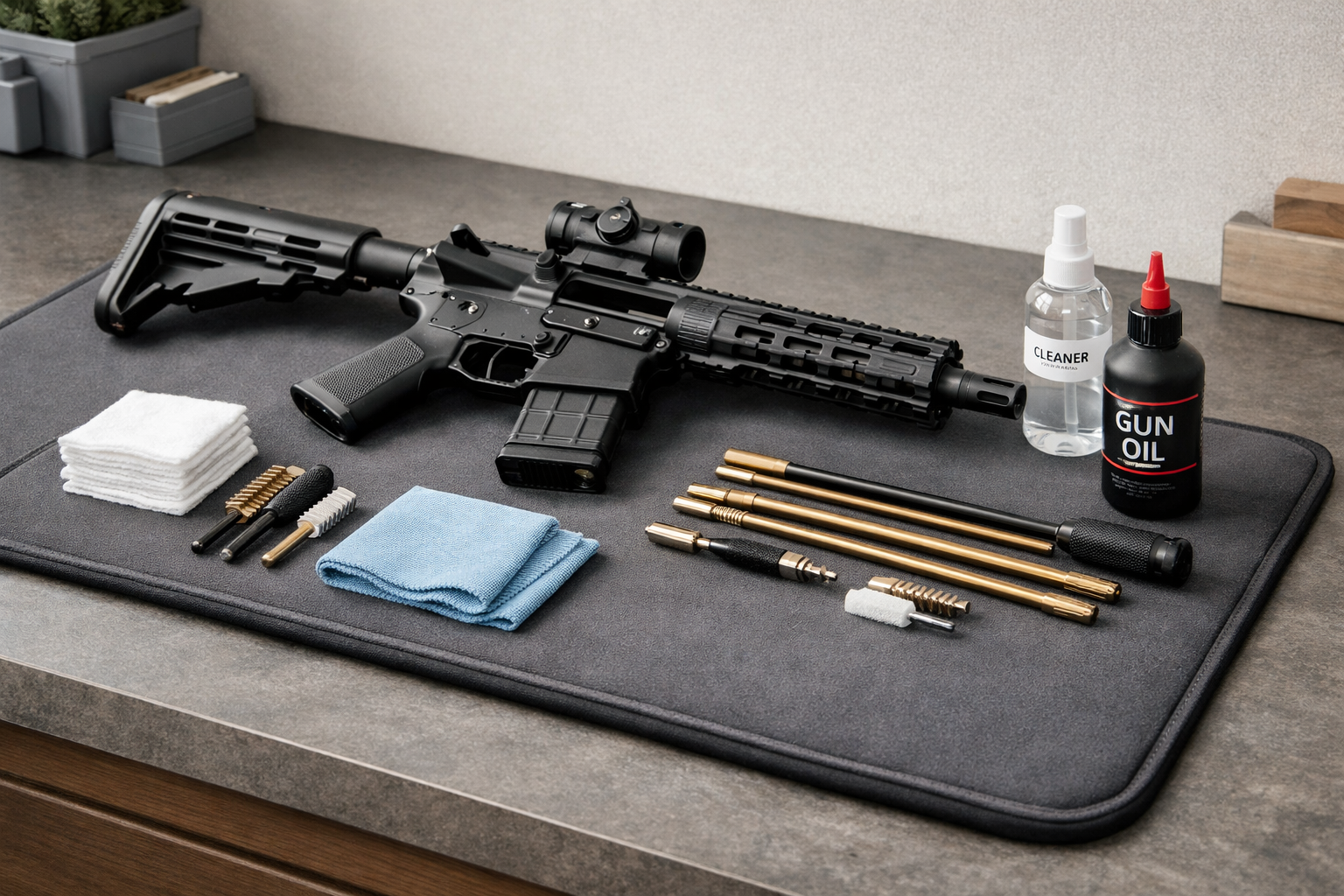

Keeping a firearm clean is not about making it look pretty for the safe. Proper cleaning and routine maintenance help support reliable function, reduce corrosion, and give you a chance to inspect parts for wear before a small issue becomes a bigger one. For new gun owners, the process can feel intimidating at first, but the basics are straightforward when you approach them safely and methodically.
This guide covers the essentials: why cleaning matters, what supplies you actually need, and the general steps involved in routine firearm maintenance. Whether you are maintaining a home defense handgun, a hunting rifle, or a range-ready shotgun, the same core principle applies: start safe, work carefully, and follow the manufacturer’s instructions.
Safety note: Always verify that the firearm is unloaded before any cleaning or maintenance begins. Remove all ammunition from the work area, and if you are unsure about disassembly or reassembly, stop and consult the owner’s manual or a qualified gunsmith.
Why Firearm Cleaning Matters
Every time a firearm is fired, residue builds up. Carbon, powder fouling, old lubricant, dust, lint, and environmental moisture can all affect how a gun performs over time. In a dry climate, dust and debris may be more of a concern. In humid or wet conditions, corrosion becomes the bigger risk. Either way, routine cleaning helps protect your investment and promotes dependable operation.
There are three main reasons to clean a firearm regularly:
- Reliability: Fouling can slow moving parts, interfere with feeding or extraction, and generally make a firearm less consistent.
- Longevity: Proper lubrication and rust prevention help reduce wear and protect metal surfaces.
- Inspection: Cleaning gives you a chance to spot cracks, unusual wear, loose screws, damaged springs, or other issues early.
That said, cleaning is not the same as overhauling. A basic routine maintenance session is usually all most owners need after regular use. Deep disassembly is not required for every cleaning, and in some cases it is better left to a professional.
Basic Supplies You’ll Need
You do not need a giant bench full of gear to clean a firearm well. A few quality, purpose-built tools are enough for most owners.
- Owner’s manual: This is the first tool you should use. It explains how to safely field strip and reassemble your specific firearm.
- Cleaning mat or protected surface: Helps keep parts organized and protects your table or bench.
- Cleaning rod, bore snake, or pull-through cable: Used to clean the barrel safely and efficiently.
- Brushes and patches: Nylon or brass brushes, patch holders, and cotton patches help remove fouling.
- Solvent: Used to loosen carbon, powder residue, and copper or lead buildup where appropriate.
- Lubricant and protective oil: Applied sparingly to reduce friction and help prevent rust.
- Microfiber cloths or lint-free rags: Useful for wiping exterior surfaces and removing excess product.
- Nylon utility brush or old toothbrush: Helpful for getting into crevices without damaging finish or parts.
- Eye protection and gloves: Recommended, especially when using solvent or compressed air.
For beginners, a basic pistol, rifle, or shotgun cleaning kit is often the easiest place to start. Just make sure the kit matches your firearm’s caliber or gauge when relevant.
Before You Clean: Safety Comes First
Before you touch any cleaning product or tool, make the firearm safe and verify it yourself. Do not rely on assumptions. A firearm should be treated as loaded until you confirm otherwise.
- Point the firearm in a safe direction.
- Remove the magazine, if applicable.
- Open the action and lock it open if possible.
- Visually and physically inspect the chamber, magazine well, and bore area to confirm the firearm is unloaded.
- Remove all ammunition from the area before you begin cleaning.
Work in a well-ventilated space, especially if you are using strong solvents. Keep cleaners away from food, drinks, and open flames. If you are new to firearms, take your time. Fast cleaning is not the goal; safe cleaning is.
General Steps for Routine Firearm Cleaning
Different firearm types vary, but the overall process is similar. Always start with the manufacturer’s recommended field strip procedure for your exact model.
1. Confirm the firearm is unloaded
This is the non-negotiable first step. Double-check the chamber and any magazine area. If you are not fully certain, stop and verify again.
2. Field strip according to the manual
Most firearms can be broken down into a few basic components for routine cleaning. Field stripping should not require force. If something feels stuck, re-check the instructions rather than pushing harder.
3. Clean the barrel
Run a solvent-treated patch, bore snake, or cleaning tool through the barrel as directed by the manual. Follow with a brush if needed, then use dry patches until they come out relatively clean. The goal is to remove fouling without scrubbing aggressively.
4. Clean the action and critical contact points
Use a nylon brush and cloth to remove residue from the slide, bolt, receiver, breech face, feed area, and other moving parts. Focus on places where dirt and carbon collect. You do not need to make the firearm spotless; you want it clean enough to function smoothly.
5. Wipe and inspect parts
As you clean, look for excessive wear, cracked components, dents, rust, or anything that seems unusual. Catching a problem early is one of the biggest advantages of routine maintenance.
6. Apply lubricant sparingly
One of the most common beginner mistakes is using too much oil. Excess lubricant can attract dust and create a sticky buildup. A light coat on the points where metal moves against metal is usually enough. The owner’s manual should indicate where lubrication is needed and where it should not be applied.
7. Reassemble and perform a function check
Put the firearm back together carefully and ensure everything moves as expected. Follow the manual’s recommended function check procedure. If a part does not fit correctly or something feels wrong, do not force it.
8. Store it properly
Once clean, store the firearm in a dry, secure location. If you use a case, safe, or lockbox, make sure moisture is not trapped inside. A clean firearm can still rust if it is stored in a damp environment.
Common Cleaning Mistakes to Avoid
Even careful owners can develop bad habits over time. Avoid these common mistakes:
- Using too much solvent or oil: More is not better. Excess product can create grime buildup.
- Skipping the manual: Every firearm is a little different, and the manual matters.
- Forcing disassembly: If a part resists, pause and verify the proper method.
- Using the wrong tools: Hard metal tools can scratch finishes or damage delicate parts.
- Ignoring safety checks: Never assume a gun is unloaded just because it “should be.”
- Overcleaning to the point of wear: Aggressive scrubbing is unnecessary for routine maintenance and can cause damage if done carelessly.
A good cleaning routine should preserve the firearm, not punish it.
How Often Should You Clean a Firearm?
There is no single schedule that fits every owner. Frequency depends on how often you shoot, what type of firearm you own, and the environment where it is used and stored.
As a general rule, many owners clean their firearms:
- After a range session or training day
- After exposure to rain, humidity, mud, or dust
- Before long-term storage
- Any time the firearm starts to show reliability issues or heavy fouling
Some modern firearms can run for extended periods with minimal cleaning, but that does not mean maintenance should be ignored. Follow the manufacturer’s guidance, and inspect the firearm regularly even if you do not perform a full cleaning every time.
Cleaning, Ownership, and Responsible FFL Support
Good firearm ownership involves more than maintenance. It also includes understanding legal transfers, safe handling, and buying from trustworthy sources. If you are purchasing a firearm online or transferring one through a dealer, working with a licensed FFL transfer partner helps keep the process organized and compliant.
At RPG Tactical, a veteran owned and operated licensed firearms dealer, we support responsible ownership through firearm sales, FFL transfer services, and practical education for local gun owners. Whether you are looking for FFL transfer Vail AZ, firearm transfer Tucson, or a dependable Southern Arizona FFL, the same principle applies: use a trusted process, follow the law, and take care of your equipment once it is in your hands.
That mindset makes a difference whether you are new to firearms or have years of experience.
Key Takeaways
- Always verify the firearm is unloaded before cleaning.
- Use the owner’s manual as your primary guide.
- Keep your cleaning kit simple, safe, and firearm-appropriate.
- Use solvent and lubricant sparingly.
- Routine inspection is just as important as removing fouling.
- If you are unsure about disassembly or reassembly, ask a professional.
FAQ
How often should I clean my firearm?
For many owners, cleaning after range use or after exposure to dirt, rain, or humidity is a good baseline. Firearms stored for long periods should also be inspected and cleaned before storage and periodically afterward. Always follow the manufacturer’s recommendations for your specific model.
Do I need to clean a brand-new firearm?
Often, yes. New firearms may arrive with packing oils, preservative grease, or manufacturing residue. A light cleaning and inspection before first use is usually a smart habit, but again, check the manual first so you do not remove needed factory lubrication or violate model-specific guidance.
Can I use household cleaners or random oils?
It is better to use products made for firearms. Household cleaners can damage finishes, leave harmful residues, or provide poor lubrication. Many general-purpose oils are not ideal for the heat, pressure, and fouling that firearms experience.
Is it okay to clean a firearm without field stripping it?
For a quick wipe-down, yes, but routine cleaning is usually more effective after field stripping. That said, do not go deeper than you are comfortable with. If a manufacturer recommends only basic user-level disassembly, respect that guidance.
What if I am not confident taking it apart?
That is completely normal. Start with the manual, basic exterior cleaning, and simple field stripping if the design allows it. If you are still unsure, ask a qualified gunsmith, experienced instructor, or your local licensed dealer for help.
Related Resources
- NSSF: How to Clean a Gun — A practical overview of basic cleaning habits and maintenance principles for firearm owners.
- NRA Gun Safety Rules — A simple refresher on the core safety rules that should guide every cleaning session and range visit.
- ATF Firearms Page — Official federal firearms information for owners who also need help understanding transfers and compliance basics.
- Project ChildSafe — A widely respected safety resource focused on secure storage and responsible gun ownership habits.