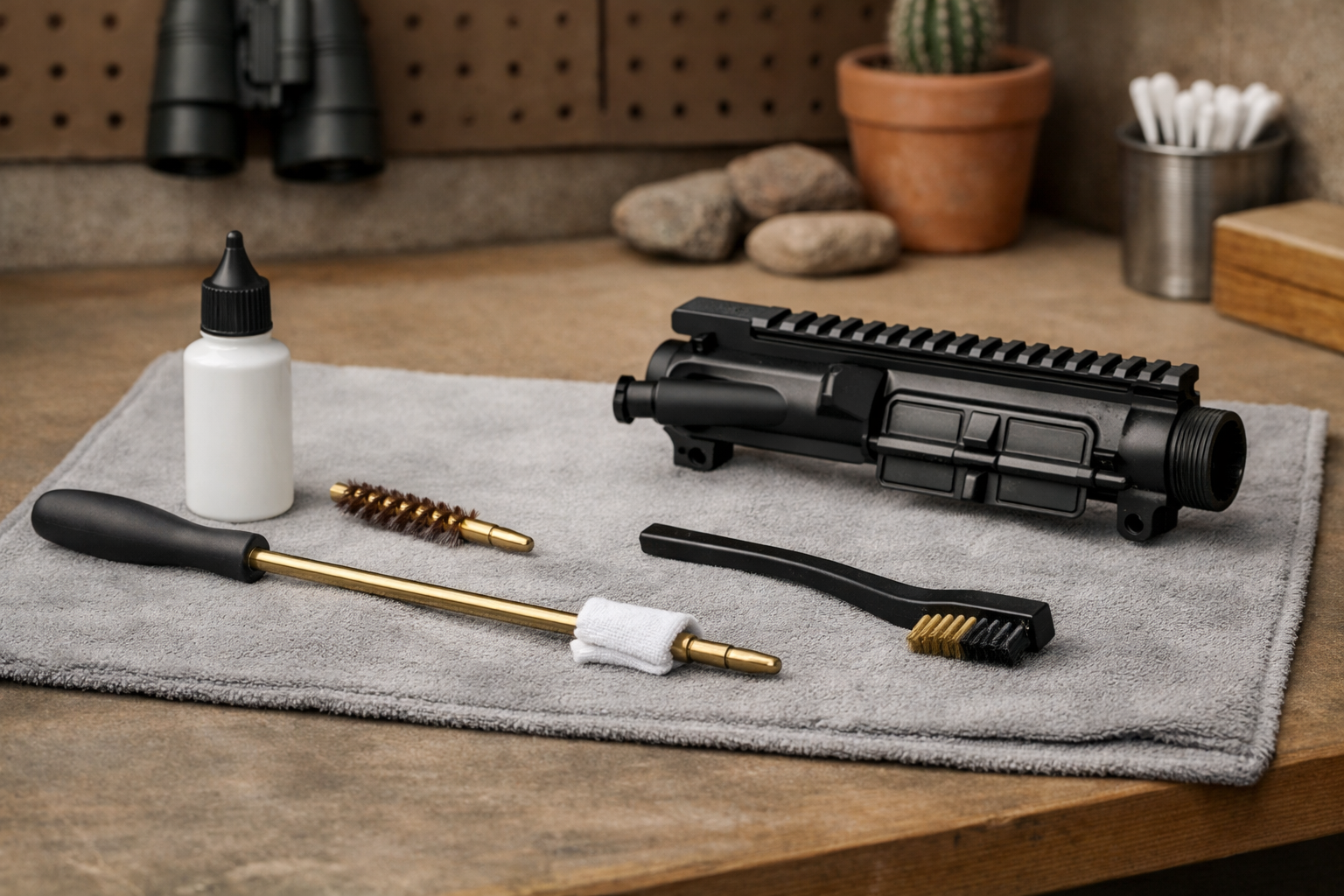

How often you should clean your firearm depends less on a rigid rule and more on how you use it, where you store it, and what kind of ammunition you shoot. Some guns will keep running reliably with only light maintenance after a few range trips. Others, especially carry guns or firearms used in harsh conditions, benefit from a more regular cleaning routine.
At RPG Tactical, a veteran-owned and operated licensed firearms dealer, we often help customers who are picking up firearms through FFL transfer services. Whether your purchase comes through a local transfer in Southern Arizona or another dealer, knowing when to clean your gun is part of responsible ownership. Good maintenance protects reliability, helps you spot wear early, and keeps your firearm ready when you need it.
There Is No Single “Correct” Cleaning Schedule
One of the biggest misconceptions new owners have is that every firearm needs to be cleaned after every single use. In reality, many modern firearms can tolerate some fouling if they are properly lubricated and inspected, and some can go a long time between deep cleanings. At the same time, neglecting a gun for too long can lead to malfunctions, corrosion, or hidden wear.
The right schedule depends on a few things:
- How often you shoot
- Whether the firearm is for carry, defense, hunting, or range use
- The environment — humidity, dust, rain, dirt, and salt air all matter
- The ammunition type — some loads create more fouling than others
- How the gun is stored — in a safe, in a case, or exposed to the elements
Practical Cleaning Guidelines by Use
Everyday carry and defensive firearms
Firearms that you carry regularly should be inspected and cleaned more often than range-only guns. They spend time close to your body, which means sweat, lint, and pocket debris can build up quickly. If you carry daily, a quick inspection every week or two is a practical habit for many owners, with a more thorough cleaning after any range session or whenever the gun has been exposed to moisture or dirt.
For concealed carry, function matters more than appearance. A carry gun that looks clean but is dry, dirty, or corroded is not in good shape. Wipe it down often and pay close attention to the magazine, chamber area, and exterior metal surfaces.
Range guns and competition firearms
If you shoot frequently, a good starting point is to clean after each range trip or every few hundred rounds, depending on the firearm and ammo. For some general-purpose guns, 200 to 500 rounds may be a reasonable starting range, but that is not a universal rule. Some pistols and rifles will keep running longer, while some precision or competition guns may perform best when kept cleaner and better lubricated.
Even if you do not perform a full cleaning every time, inspect the firearm after shooting. Check for unusual fouling, loose screws, worn parts, and lubrication levels. A quick wipe and relube may be enough between deeper cleanings.
Hunting and field use
Hunting guns should be cleaned after each outing, especially if they were exposed to rain, snow, mud, dust, or brush. Outdoor use is tough on firearms, and moisture is one of the fastest ways to create long-term problems. If you hunt in humid or wet conditions, do not wait for visible rust to appear before cleaning.
For rifles and shotguns used in the field, it is also wise to inspect the bore, chamber, and external metal surfaces once the season is over and again before storing the firearm long-term.
Stored firearms
Firearms stored for home defense, collection, or occasional use still need periodic attention. A gun in a safe may not be firing rounds, but it can still be affected by humidity, temperature changes, and old lubricant breaking down over time. A thorough inspection every few months may be a reasonable habit, and many owners choose a seasonal schedule — for example, at the start of summer and winter.
If your firearm lives in a foam-lined case, gun sock, or hard case, check it regularly. Some storage materials trap moisture or residue, which can accelerate corrosion if left unchecked.
How Environment Changes Cleaning Frequency
Where you live and how you carry or store a firearm can change everything. In dry climates, guns may not rust as quickly, but dust and fine grit can get into moving parts. In humid environments, sweat and moisture become the bigger concern. Near the coast, salt air can corrode metal faster than many owners expect. In dusty or windy areas, even a clean-looking firearm can accumulate abrasive debris.
For shooters in Southern Arizona, dry weather does not mean maintenance can be ignored. Dust, heat, and long storage periods can still affect reliability. If you are picking up a firearm through local firearm transfer services or a licensed FFL transfer, take a few minutes to inspect and wipe it down before it becomes part of your regular rotation.
Best rule of thumb: clean more often when the firearm is exposed to moisture, dirt, sweat, or heavy shooting, and inspect it regularly even when you are not firing it.
Ammo Type Matters More Than Many New Owners Realize
Different ammunition leaves behind different levels of fouling. Standard modern jacketed ammunition is generally easy to manage with routine cleaning. By contrast, lead-heavy loads, low-quality bulk ammo, and certain specialty rounds can leave more residue in the bore and action.
If you use older surplus ammunition, verify whether it is corrosive and follow the ammunition or firearm manufacturer’s cleaning guidance promptly after shooting. Corrosive primers can leave deposits that may attract moisture and, if not addressed, contribute to damage. Black powder firearms and black powder substitutes are in a category of their own and generally should be cleaned as soon as possible after use, consistent with the firearm or product manufacturer’s guidance.
Steel-cased ammunition is not automatically harmful, but it can create different wear patterns and may be dirtier in some guns. The important thing is to watch how your specific firearm runs. If you notice sluggish cycling, sticky extraction, or excessive buildup, shorten your cleaning interval.
What “Clean Enough” Actually Means
A firearm does not need to look brand new to function safely. In many cases, “clean enough” means the bore is reasonably free of fouling, the chamber and action are free of debris, and the gun has the proper amount of lubricant on the correct contact points.
More cleaning is not always better. In some cases, over-cleaning with harsh tools or too much solvent can wear finishes, stress small parts, or strip away necessary lubrication. The goal is not to make the gun spotless every time. The goal is to keep it reliable, protected, and easy to inspect.
If you are new to firearms, the best place to start is the owner’s manual. Manufacturers often recommend specific intervals, lubricants, and disassembly limits. If you are unsure about field stripping or reassembly, ask a qualified gunsmith or experienced instructor for help before you force anything.
A Simple Maintenance Routine That Works for Most Owners
- Unload and verify the firearm is clear before any cleaning or inspection.
- Wipe down the exterior after use to remove fingerprints, sweat, and debris.
- Inspect the bore, chamber, and moving parts for fouling or damage.
- Clean more thoroughly after heavy use, adverse weather, or dirty ammo.
- Lubricate lightly where the manufacturer recommends.
- Store it properly in a dry, secure location with regular checks.
That routine is enough for most general-purpose guns and helps prevent the kind of neglect that leads to avoidable problems later.
Key Takeaways
- There is no universal cleaning schedule. The right frequency depends on use, storage, environment, and ammunition.
- Carry guns need more attention. Sweat, lint, and frequent handling justify more regular inspections and wipe-downs.
- Outdoor use demands faster cleaning. Rain, mud, dust, and humidity can damage a firearm quickly.
- Ammo type matters. Corrosive or especially dirty ammunition should be addressed promptly.
- Inspect even when you are not shooting. A stored gun still needs periodic checks for rust, dryness, and residue.
- When in doubt, follow the manual. Your firearm’s manufacturer is the best source for maintenance guidance.
FAQ
Do I need to clean my firearm after every range trip?
Not always. Many owners clean after every trip because it is simple and consistent, but some firearms can go several sessions between full cleanings if they are well maintained. At a minimum, inspect the gun, wipe away residue, and make sure it is properly lubricated.
Can I clean my gun too often?
Yes, if “cleaning” means excessive disassembly, harsh solvents, or repeated scrubbing of parts that do not need it. Routine maintenance is good. Overdoing it can create wear or remove needed lubrication. Clean with purpose, not out of habit alone.
What are the signs that my firearm needs cleaning?
Common signs include sluggish cycling, visible fouling, sticky extraction, dry or dirty moving parts, and any unusual rust or discoloration. If a firearm starts behaving differently, inspect it before you keep using it.
How often should a stored firearm be checked?
Every few months is a reasonable baseline for many owners, especially in humid environments or if the gun is stored in a case or safe for long periods. Some owners prefer seasonal inspections. The key is to confirm that the firearm is still dry, clean, and lightly lubricated where needed.
Does a new firearm need cleaning before first use?
Usually, yes — at least a wipe-down and inspection. New firearms often ship with factory preservative or packing residue, and it is smart to confirm the gun is clean, properly lubricated, and functioning as expected before the first range session.
Related Resources
- ATF Firearms Page — A federal resource hub for firearms information, rules, and official guidance.
- National Shooting Sports Foundation (NSSF) — A major industry organization with practical education on safe and responsible firearm ownership.
- USA.gov Firearms — A government starting point for federal firearms topics and links to official agencies.