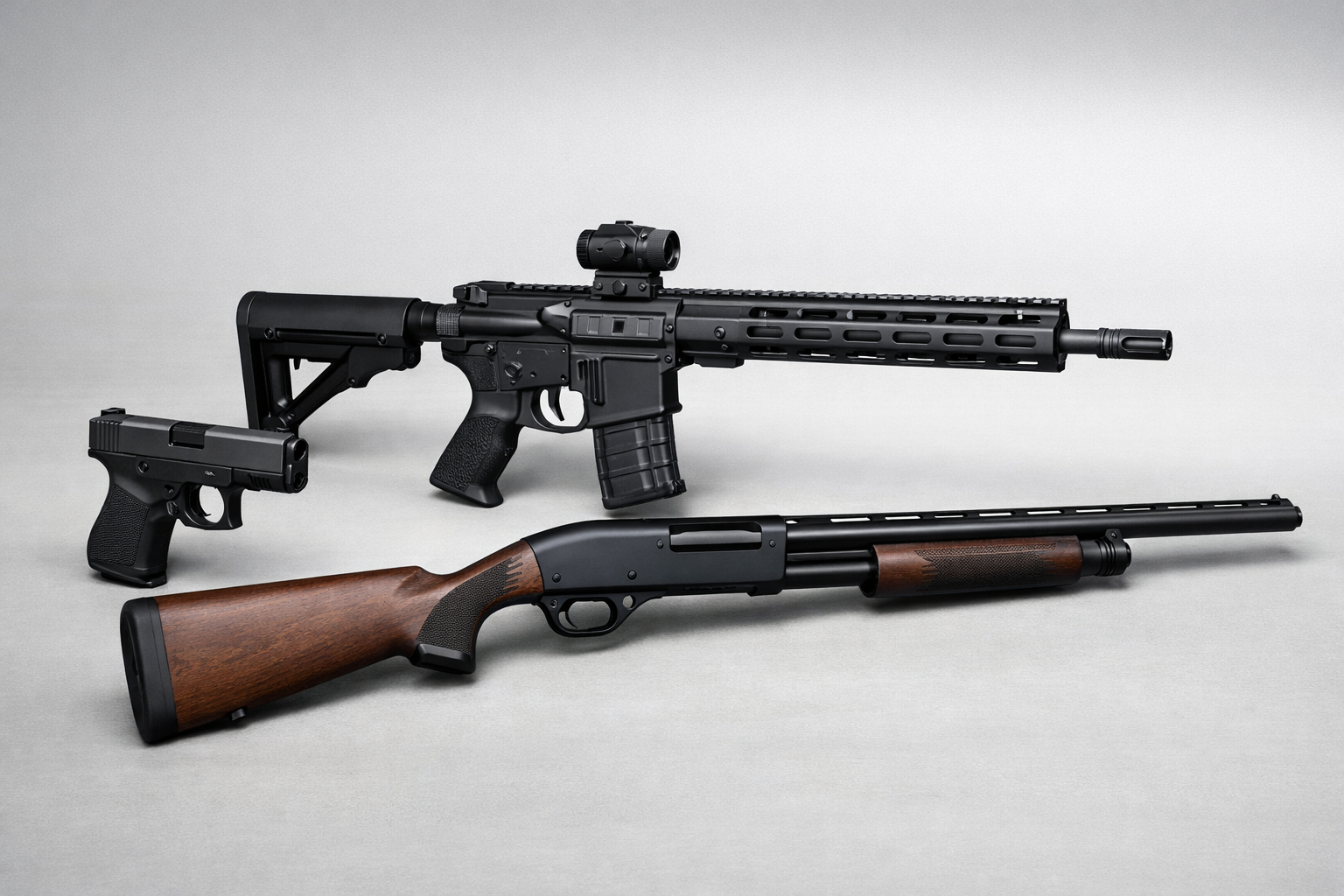

Choosing between a pistol, rifle, and shotgun is one of the first major decisions many gun owners face. Each firearm type has its own strengths, tradeoffs, and learning curve, so the “best” choice depends less on trends and more on how you plan to use the firearm, how much training you’re willing to do, and what feels manageable in your hands. At RPG Tactical, a veteran-owned and operated licensed firearms dealer, we help responsible buyers think through those choices every day, whether they are shopping locally, arranging FFL transfer services, or looking for dependable guidance on safe ownership.
If you’re comparing options for personal defense, range use, hunting, or general home ownership, this guide breaks down the practical differences in plain language. It also touches on buying considerations like licensed FFL transfer requirements and how local firearm transfer services fit into the process for customers searching terms like FFL transfer Vail AZ, firearm transfer Tucson, or Southern Arizona FFL.
The short version: what each firearm type is known for
Pistol
Pistols are compact handguns designed for one-handed or two-handed use. They are usually easier to carry discreetly, faster to store in a small safe, and often the first choice for people who want a firearm for concealed carry or everyday portability.
- Common uses: concealed carry, home defense, range practice, and general familiarity training
- Handling profile: shorter barrel, lighter weight, and typically more noticeable muzzle flip than long guns
- Learning curve: often the simplest to transport, but marksmanship and trigger control still matter a lot
Rifle
Rifles use a longer barrel and shoulder stock, which generally improves stability and makes accurate shooting easier at distance. They are often favored for sport shooting, hunting, and certain home defense setups, depending on the owner’s needs and local laws.
- Common uses: target shooting, hunting, competition, and some defensive roles
- Handling profile: more points of contact with the body, usually greater control and precision
- Learning curve: often very manageable for new shooters because the stock and longer sight radius help with control
Shotgun
Shotguns are known for versatility and power, using shells that may contain shot or a single projectile depending on the load. They are common for hunting, sport shooting, and home defense, but they also require attention to recoil management and ammunition selection.
- Common uses: hunting, clay sports, home defense, and rural property use
- Handling profile: typically heavier recoil than many rifles and pistols, with a wider pattern depending on load and distance
- Learning curve: straightforward mechanically, but proper shoulder placement and recoil control are important
How they differ in real-world handling
Size and portability
Pistols are the easiest to carry, store, and move around with. Rifles and shotguns are larger and less convenient to transport, but that extra size can make them steadier and easier to shoot accurately for some people. If your main concern is portability, the pistol usually wins. If your main concern is stability, the rifle or shotgun may be a better fit.
Recoil and comfort
Recoil is not just about “power”; it affects confidence, follow-up shots, and how willing a new owner is to practice. Many handguns feel snappy, especially smaller models. Rifles are often the easiest to control for precision shooting. Shotguns can produce a sharper recoil impulse, especially with heavier loads, which is why fit and training matter so much.
Accuracy and intended distance
Rifles generally offer the easiest path to accuracy at distance because the longer barrel and shoulder support help steady the firearm. Pistols are usually more challenging to shoot precisely because they rely on smaller sight radius and more shooter control. Shotguns are highly effective within their intended uses, but the exact performance depends heavily on ammunition type and purpose.
Storage and maintenance
All firearms should be stored securely and cleaned regularly, but long guns can require a bit more physical storage space. Pistols are often easier to secure in compact safes, while rifles and shotguns may need larger storage solutions. No matter which type you choose, routine cleaning and inspection are essential for safe, reliable operation.
The best firearm is not the one with the biggest reputation; it is the one you can safely handle, maintain, and train with consistently.
Which firearm type fits different needs?
If you want concealed carry or maximum portability
A pistol is usually the most practical choice. It is built for convenience and carry, which is why many responsible owners begin with a handgun if personal defense and portability are top priorities. That said, pistols demand regular practice because their smaller size can make shooting well more difficult than many beginners expect.
If you want a versatile range or hunting firearm
A rifle is often the easiest place to start for people who want confidence-building accuracy and a stable shooting platform. Rifles are excellent for target work and can be a natural fit for hunters, especially where legal and appropriate for the game being pursued. For many new shooters, a rifle feels more intuitive than a handgun.
If you want a close-range, highly versatile long gun
A shotgun may be the right choice if you want a firearm with broad utility and are willing to manage the recoil and ammunition selection that come with it. Many owners appreciate shotguns for rural property use, hunting, and defense roles, but they benefit from hands-on training because they behave differently from both pistols and rifles.
If you are a first-time firearm owner
There is no universal answer. A first-time buyer should think about size, recoil tolerance, training time, storage space, and the main purpose for the firearm. Many new owners find that starting with a rifle at the range helps build confidence, while others prefer a pistol because it aligns with their carry or home defense goals. A quality training class can help you decide faster than shopping alone.
How to think about the buying process
Once you know the type of firearm that fits your needs, the next step is making sure the purchase process is legal and smooth. If you buy online or from out of state, you will typically need to use firearm transfer services through a local dealer. That is where a licensed FFL transfer comes in.
For buyers searching for FFL transfer services in Southern Arizona, the process usually involves having the firearm shipped to a local Federal Firearms License holder, where the required paperwork and transfer steps are completed. Whether someone is looking for FFL transfer Vail AZ, firearm transfer Tucson, or a trusted Southern Arizona FFL, the goal is the same: keep the transfer compliant, efficient, and properly documented.
Working with a reputable dealer like RPG Tactical can also help first-time buyers avoid confusion about delivery timing, identification requirements, and any state or federal rules that apply to the transfer.
Common mistakes new buyers make
- Choosing based on hype instead of fit: A popular model is not automatically the right one for your hand size, strength, or purpose.
- Underestimating recoil or grip difficulty: A firearm that feels fine in the store may feel different after a full range session.
- Skipping training: A safe, reliable owner should know how to load, unload, store, and maintain the firearm.
- Ignoring storage needs: Secure storage matters just as much as the purchase itself.
- Overlooking the transfer process: If the firearm is coming from another dealer or an online retailer, plan ahead for the licensed FFL transfer.
Key takeaways
- Pistols are the most portable and best suited for concealed carry and compact storage.
- Rifles are often the easiest to shoot accurately and are strong choices for range use, hunting, and some defensive roles.
- Shotguns are versatile long guns with a different recoil profile and ammunition considerations.
- The right choice depends on your intended use, comfort level, and commitment to training.
- If you are buying online or across state lines, use a proper FFL transfer through a trusted dealer.
FAQ
Which firearm type is best for a beginner?
There is no single best answer, but many beginners do well starting with a rifle because it is often easier to control and shoot accurately. Others prefer a pistol if their main goal is concealed carry. The best beginner firearm is one that matches your intended use and encourages safe, consistent practice.
Is a pistol better than a rifle for home defense?
Not automatically. Pistols are compact and easy to store, while rifles can be easier to shoot accurately for some users. Home defense decisions should factor in training, layout of the home, storage, and local laws. A professional training class can help you make a practical, informed choice.
Are shotguns harder to use than rifles?
Not necessarily harder, but different. Shotguns can be very straightforward mechanically, yet recoil and load selection matter more than many people expect. Some shooters find rifles easier to learn on because they are often gentler to control.
Can I buy a firearm online and have it shipped to a local dealer?
Yes, in many cases you can, but the firearm must be transferred through a licensed dealer in accordance with federal and state law. That is where FFL transfer services come into play. If you are local to Southern Arizona, a dealer offering firearm transfer services can help complete the process correctly.
Do pistols, rifles, and shotguns need different maintenance routines?
The basic principles are similar: keep the firearm unloaded, clean it according to manufacturer guidance, inspect for wear, and store it securely. The parts and procedures vary by platform, but regular maintenance is important for all three.
Related Resources
- ATF Firearms Questions and Answers — A reliable federal reference for common questions about firearm purchasing, possession, and transfer rules.
- ATF Federal Firearms Licenses — Useful background on what an FFL is and why licensed transfers matter.
- NSSF Firearm Safety Resources — Practical safety guidance for new and experienced gun owners alike.
- Arizona DPS Concealed Weapons Permit Information — Helpful for Arizona residents who want to understand state carry-related processes and requirements.