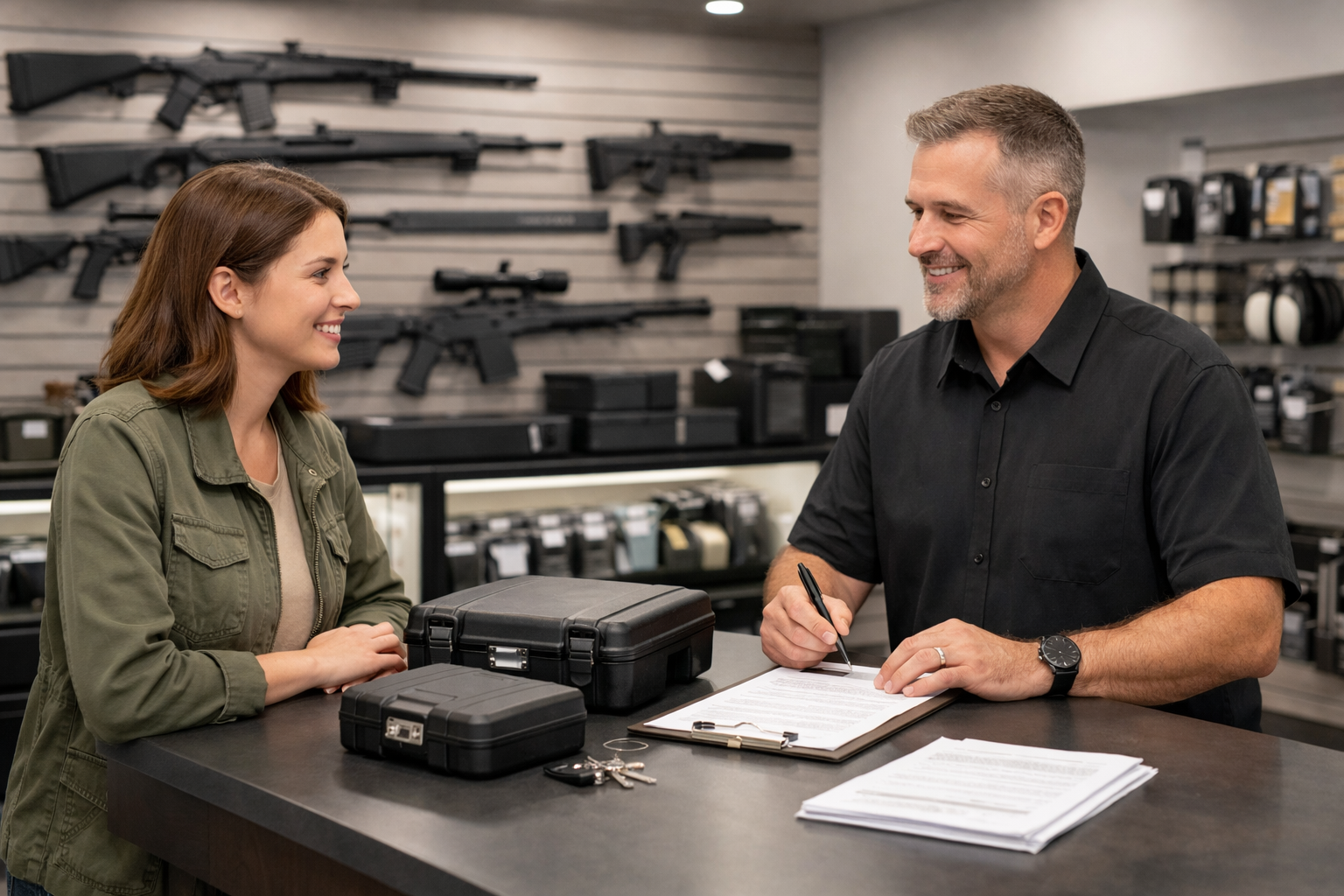

If you’re buying a firearm online, from an out-of-state seller, or through a private transaction that requires dealer involvement, you’ll likely hear the term FFL transfer. For first-time buyers, the process can sound more complicated than it really is. In plain terms, an FFL transfer is the legal handoff of a firearm through a federally licensed firearms dealer who verifies paperwork, handles the required background check, and releases the firearm to you once all legal conditions are met.
For many gun owners, firearm transfer services are a routine part of responsible ownership. They help keep purchases compliant with federal and state law, and they give buyers a local point of contact for questions, timing, and pickup. If you’re looking for a licensed FFL transfer in Southern Arizona, understanding the process ahead of time can save you stress and help you know exactly what to expect.
What Is an FFL Transfer?
An FFL transfer is the process of sending a firearm to a federally licensed firearms dealer, commonly called an FFL, so that the dealer can complete the legal transfer to the buyer. The dealer receives the firearm, logs it into inventory, confirms the buyer’s identity, and completes the necessary federal and state paperwork before releasing the firearm.
The key idea is simple: the firearm does not go straight to the buyer when a licensed transfer is required. Instead, it goes through a dealer who is authorized to handle the transfer lawfully. This is why people often search for terms like FFL transfer services, firearm transfer Tucson, or FFL transfer Vail AZ when arranging a purchase.
In short: an FFL transfer is the legal bridge between the seller and the buyer when a firearm must be delivered through a licensed dealer.
When Is an FFL Transfer Required?
FFL transfers are commonly required in situations where the law or the seller’s policies do not allow a direct handoff. The most common examples include:
- Online purchases from retailers or auction sites that ship firearms to a local dealer.
- Out-of-state purchases, since interstate firearm transfers generally require dealer involvement.
- Private sales when the buyer and seller want to use a dealer to ensure compliance and documentation.
- Transfers received as gifts or estate items when a dealer must process the transfer before release.
- Manufacturer returns or warranty work when a firearm comes back through a dealer.
Not every transaction is identical, and state laws can add extra requirements. That’s why it’s smart to work with a local Southern Arizona FFL that understands the process and can guide you through the steps without confusion.
How the FFL Transfer Process Works
While each dealer may have slightly different procedures, the basic transfer process is usually straightforward. Here’s a high-level overview.
1. Choose the receiving FFL
Before the firearm ships, the buyer typically selects a local FFL who will receive it. The sending seller or retailer will often need the dealer’s license information, shipping instructions, and contact details. Many buyers look for a dealer with clear pricing, fast communication, and a reputation for reliable service.
2. Place the order or arrange the transfer
If you are buying online, the seller may ask for the receiving dealer’s FFL documentation before shipping. If it is a private transfer, the seller and buyer may coordinate with the dealer directly. At this stage, it’s helpful to confirm fees, pickup hours, and any specific identification requirements.
3. The firearm ships to the dealer
The firearm is shipped to the selected FFL, not to your home. Once it arrives, the dealer logs it into their records and stores it securely until the transfer is completed.
4. Complete the paperwork and background check
When you arrive to pick up the firearm, you’ll complete the required forms. In most cases, this includes federal transfer paperwork and a background check. The dealer will verify your identity and determine whether the transfer can be released under applicable law.
5. Pick up your firearm
After the required checks are completed and any waiting period is satisfied, the firearm is released to you. Bring valid identification and be prepared to answer questions accurately and honestly. A smooth pickup usually comes down to showing up prepared and understanding the local rules.
Why Local Transfer Services Matter
Working with a local dealer is about more than convenience. It helps ensure the transfer is handled properly, and it gives buyers a trustworthy place to ask questions. For new firearm owners, that matters a great deal.
A local dealer can help you understand:
- What documents to bring
- How long the transfer might take
- Whether your purchase is compliant with local rules
- What fees apply before you commit to the transfer
- How to avoid delays caused by incomplete paperwork
For buyers searching for firearm transfer Tucson or FFL transfer Vail AZ, local service can also reduce shipping complications and make it easier to coordinate pickup. A responsive dealer can save time and reduce the chance of costly mistakes.
At RPG Tactical, we understand that first-time buyers often want a clear, low-pressure explanation of the process. As a veteran-owned and operated licensed firearms dealer, we focus on practical guidance, compliant handling, and a straightforward pickup experience for responsible gun owners across Southern Arizona.
What to Expect as a First-Time Buyer
If this is your first transfer, don’t worry. The process is designed to be manageable when you know what to expect. Here are a few practical tips:
- Bring valid ID that matches the information on your order.
- Confirm the transfer fee before the firearm ships so there are no surprises.
- Check local rules since state and local requirements can affect timing and eligibility.
- Be patient during background checks and paperwork review.
- Ask questions if anything is unclear; a good dealer should be willing to help.
It’s also important to remember that a transfer is not just about taking possession of the firearm. It’s about doing so legally and responsibly. A reputable dealer will take that seriously and expect the same from the buyer.
Common Mistakes to Avoid
Most transfer delays happen for simple reasons. Avoiding these common mistakes can make your experience much smoother:
- Sending a firearm to a dealer before confirming they will accept the transfer
- Using the wrong name or shipping information on the purchase order
- Arriving without proper identification
- Ignoring state-specific rules that may apply to the transfer
- Assuming transfer fees, background checks, or waiting periods are the same everywhere
Taking a few minutes to confirm the details before the firearm ships can prevent unnecessary delays. That’s especially important if you’re buying from an online retailer or coordinating a private sale across state lines.
Key Takeaways
- An FFL transfer is the legal process of receiving a firearm through a federally licensed dealer.
- Transfers are commonly required for online purchases, out-of-state sales, and many dealer-handled transactions.
- A local dealer handles the paperwork, background check, and release of the firearm according to applicable law.
- Choosing a trusted Southern Arizona FFL can make the process faster, clearer, and more convenient.
- First-time buyers should bring proper ID, confirm fees, and ask questions before pickup.
FAQ
Do I need an FFL transfer for every firearm purchase?
Not always. Some transactions may be completed directly depending on the seller, the type of firearm, and the laws that apply. However, many online, interstate, and dealer-mediated purchases do require a licensed transfer.
How long does an FFL transfer take?
The timing varies. It depends on shipping speed, dealer processing, background check results, and any required waiting period. Some transfers are completed quickly, while others may take longer based on local procedures.
What should I bring to pick up my firearm?
Bring a valid government-issued photo ID and any additional documents your dealer requests. If you are unsure, call ahead and confirm before arriving.
Can I have a firearm shipped to my home instead of an FFL?
In many cases, no. Firearms that require dealer transfer generally must be shipped to a licensed FFL, not directly to your residence. Always verify the rules that apply to your specific purchase.
Why do transfer fees vary from one dealer to another?
Dealers set their own transfer pricing based on service level, local overhead, processing time, and included support. A flat-rate provider may offer more predictable pricing, which many buyers prefer.
Related Resources
- ATF Firearms Page — A helpful starting point for federal firearm rules, licensing information, and official ATF guidance.
- ATF Firearms FAQ — Answers to common questions about federal firearms regulations and dealer responsibilities.
- FBI NICS Background Check System — Official information about the National Instant Criminal Background Check System used in firearm transfers.
- ATF FFL eZ Check — A tool used to verify federal firearms licenses when coordinating a transfer with a dealer.