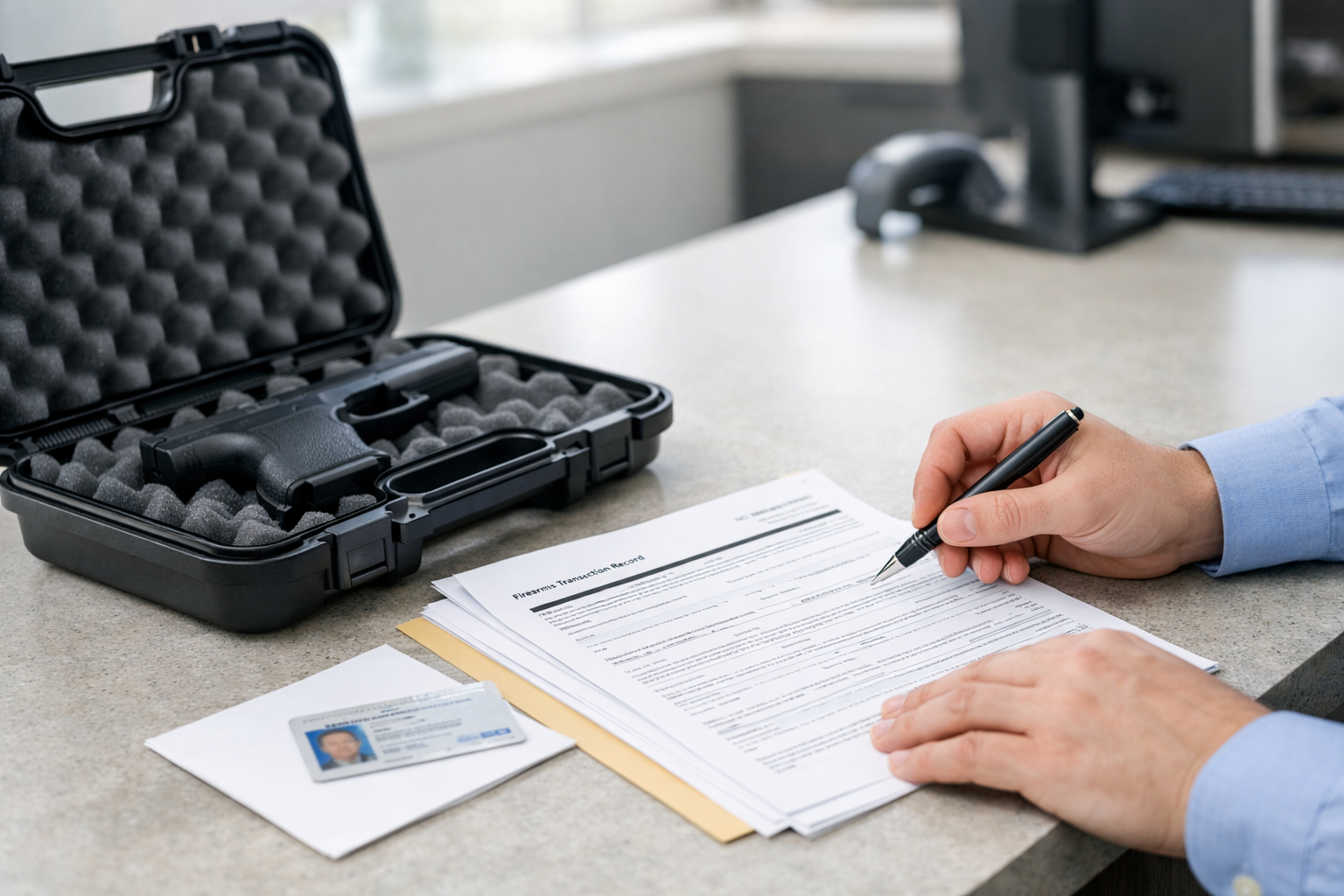

If you are buying, selling, or receiving a firearm, the transfer process is one of the most important parts of the transaction. A legal firearm transfer is not just a handoff between two people. It is a documented process that must comply with applicable federal, state, and sometimes local laws so the firearm changes possession lawfully.
For many transfers, that means working through a Federal Firearms Licensee, or FFL, who handles the required paperwork, identity verification, background check process, and recordkeeping. However, not every transfer is handled the same way. Some same-state private transfers may be lawful under federal law without an FFL, but state law may still require one. Because rules vary, it is important to confirm the process before payment is made or the firearm is shipped.
This guide explains the typical transfer process in plain language so you know what usually happens before, during, and after a lawful transfer.
What a Legal Firearm Transfer Means
A legal firearm transfer is the process of moving a firearm from one person or business to another in a way that complies with applicable law. In many cases, the transfer is completed through an FFL. Interstate transfers to an unlicensed buyer generally must be handled through an FFL in the buyer’s state. Some same-state private transfers may be lawful without an FFL under federal law, but state law may impose additional requirements.
At a high level, the transfer process is designed to confirm a few important things:
- The buyer or recipient is legally eligible to receive the firearm.
- The firearm is being transferred in accordance with federal and state law.
- The transaction is documented properly for compliance and recordkeeping.
Not every transfer looks the same. Requirements can vary depending on the type of firearm, the states involved, and whether the transfer is between private parties, family members, or through a licensed dealer. That is why it is smart to confirm the exact process before the transfer begins.
How the Transfer Process Typically Works
1. The buyer and seller agree on the firearm and terms
The process usually starts with a basic agreement: what firearm is being transferred, the sale price, who is responsible for shipping or transfer fees, and which FFL will handle the transaction if one is required.
If the firearm will be shipped to a dealer, the seller should confirm the receiving FFL’s preferred process before sending anything. If the transfer will take place locally, both parties should understand what identification, paperwork, or state-specific requirements may apply.
2. The firearm is sent to or presented at the appropriate FFL, if required
In many transfers, the firearm is delivered to the receiving FFL rather than directly to the buyer. The dealer logs the firearm into their records and prepares the transfer when the buyer arrives.
For interstate transfers involving an unlicensed buyer, federal law generally requires the firearm to be transferred through an FFL in the buyer’s state. For same-state private sales, the need for an FFL depends on both federal and state law.
For shipped transfers, the carrier’s rules and applicable law matter. Firearms must be shipped lawfully and according to carrier requirements. Ammunition is subject to separate shipping rules, so the process should not be assumed to be the same.
3. The buyer completes the required paperwork
When the buyer visits the receiving FFL, they will usually complete the required forms and provide government-issued identification. For most dealer transfers to a nonlicensee, the buyer must complete ATF Form 4473 and the FFL must complete the required background check process unless a specific legal exception applies.
This is a routine part of a lawful transfer. It is designed to verify that the firearm can legally be released to the transferee.
4. The dealer reviews eligibility and any applicable timing requirements
Once the paperwork is complete, the FFL reviews the buyer’s eligibility and follows the required background check process. Depending on the circumstances, the transfer may be subject to federal review timing, state waiting periods, or both.
Timing can vary based on:
- The buyer’s age
- The type of firearm
- State-specific waiting period laws
- A delayed background check response
- Missing or inconsistent information on the paperwork
Handguns and long guns may be treated differently under federal or state law, including with respect to age requirements and dealer transfer rules. Some transfers involving buyers under age 21 may also be subject to additional federal review timing.
The FFL cannot bypass legal requirements. If a transfer takes longer than expected, the reason is usually a legal requirement, a delayed background check response, or incomplete information.
5. The firearm is released to the buyer
Once all legal requirements are satisfied, the FFL may release the firearm to the buyer. Before leaving, the buyer should verify that the firearm matches the agreed description and inspect it carefully.
Sellers should keep receipts, shipment records, dealer contact details, and any related documentation for their records. Good documentation helps reduce confusion and preserve accountability if any question comes up later.
Information and Documents You May Need
Most lawful firearm transfers go more smoothly when everyone arrives prepared. Exact requirements vary by dealer and jurisdiction, but commonly requested items include:
- Government-issued photo identification, such as a driver’s license or state ID
- Proof of current address, if needed
- Buyer and seller contact information
- Firearm details, including make, model, caliber or gauge, and serial number
- Payment for transfer fees, shipping charges, or related costs
- Any additional permits, forms, or documents required by the dealer or state
If you are the seller, have the firearm’s exact identifying information ready before shipping or presenting it for transfer. If you are the buyer, make sure the information you provide matches your identification exactly. Small mismatches can cause delays.
Common Steps Before the Transfer Happens
A smooth transfer usually starts before anyone goes to the dealer or ships the firearm. A few checks can prevent delays:
- Confirm the transfer is lawful under federal, state, and local law
- Verify whether an FFL is required for the transaction
- Confirm the receiving FFL is willing to accept the firearm
- Check whether the firearm type affects the process
- Make sure the buyer has the required ID, payment, and any necessary state documentation
- Discuss the timeline in advance so expectations are realistic
For interstate transfers, the rules are usually more specific. In many cases, the firearm must be transferred through an FFL in the buyer’s state.
How to Avoid Delays and Misunderstandings
Most transfer problems are preventable. The biggest causes of delay are incomplete information, mismatched expectations, and failure to check the law in advance.
Communicate clearly before payment
Agree in advance on who pays the transfer fee, who pays shipping, and which dealer will handle the transfer. If the firearm is being shipped to an FFL, confirm the dealer’s process and acceptance policy before sending it.
Double-check identification details
Make sure the buyer’s name and address are accurate and consistent. If the buyer recently moved, the dealer may require updated supporting documentation.
Be precise about the firearm description
Use the correct serial number, model, and caliber or gauge. Accuracy matters for dealer intake, shipping, and recordkeeping.
Do not assume the rules are the same everywhere
What is lawful in one state may not be lawful in another. Some states require background checks or dealer involvement for private transfers. Others impose waiting periods, permits, or additional restrictions.
Expect the process to take some time
Even a straightforward transfer is not always immediate. Background checks can return quickly, but some are delayed for follow-up. A delay does not automatically mean a denial.
Special Considerations for Buyers and Sellers
For buyers
Ask questions early. If you are receiving a firearm through an FFL, confirm what identification and documents are required, whether an appointment is needed, and whether your state has extra steps for the specific firearm you are buying.
Do not assume that handguns and long guns are treated the same. Depending on the law, the rules may differ for age, waiting periods, paperwork, or dealer eligibility.
At pickup, inspect the firearm carefully and confirm that the serial number matches the paperwork.
For sellers
Do not ship a firearm until you have confirmed the receiving FFL’s information and verified that the dealer will accept the transfer. Keep records of the dealer’s contact information, shipment tracking, and communication with the buyer.
If you are transferring a high-value firearm or collection, thorough documentation helps reduce disputes and preserve accountability.
Sellers should also expect that a lawful transfer may take longer than a simple in-person exchange, especially when shipping, dealer processing, or background check delays are involved.
Key Takeaways
- A lawful firearm transfer is a documented transfer that must comply with applicable law.
- Many transfers are completed through an FFL, especially interstate transfers to unlicensed buyers.
- Some same-state private transfers may be lawful without an FFL under federal law, but state law may require dealer involvement.
- Most dealer transfers involve identification, required paperwork, and a background check process.
- Handguns and long guns may be treated differently under federal or state law.
- Waiting periods, age-based review timing, and state-specific rules can affect how long a transfer takes.
- Clear communication and accurate documentation prevent many delays.
FAQ
Do all firearm transfers have to go through an FFL?
Not always. Under federal law, some same-state private transfers may be lawful without an FFL, but state law may require dealer involvement. Interstate transfers to an unlicensed buyer generally must go through an FFL in the buyer’s state.
How long does a firearm transfer usually take?
It depends on the dealer, the background check process, the buyer’s age, and any applicable waiting period or state-specific requirement. Some transfers move quickly, while others take longer because of legal or administrative steps.
What documents should I bring to pick up a firearm?
Bring a valid government-issued photo ID and any other documents required by the dealer or state. If your address is not current, the dealer may ask for supporting documentation.
Can the process be different for handguns and long guns?
Yes. Federal and state law may treat handguns and long guns differently, including in areas such as age limits, dealer transfer requirements, and waiting periods.
What causes the most transfer delays?
Common causes include incorrect identification details, missing paperwork, delayed background check responses, shipping issues, and failure to understand state-specific legal requirements.
Related Resources
- ATF Firearms Transfer FAQ — A practical federal reference for how licensed dealers handle firearm transfers and recordkeeping.
- ATF Firearms Frequently Asked Questions — Helpful background on federal firearms rules, dealer responsibilities, and common compliance questions.
- FBI National Instant Criminal Background Check System (NICS) — An overview of the background check system used in many firearm transfer processes.
- ATF Firearms Division — The agency’s main firearms page for official guidance, forms, and regulatory information.