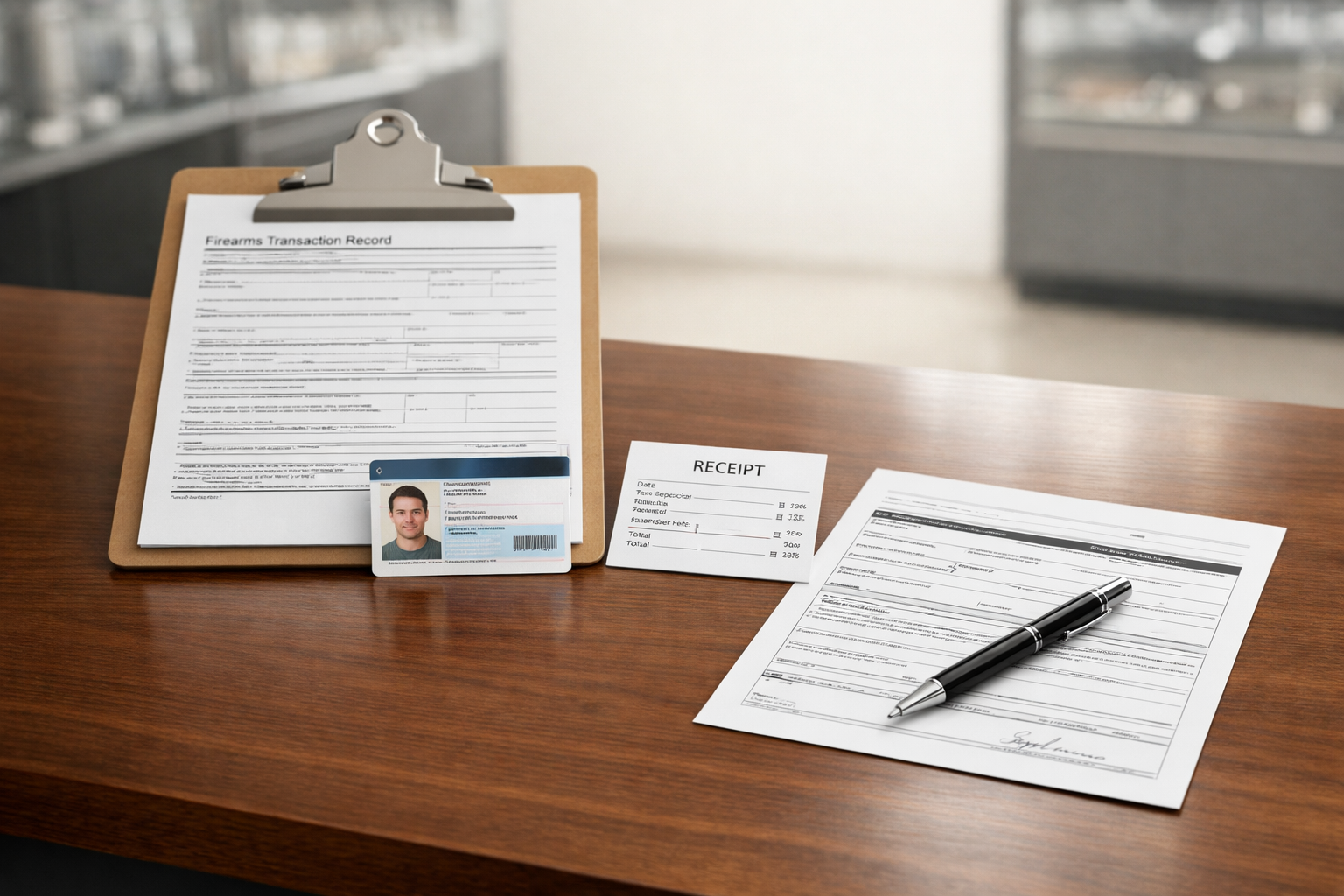

Showing up prepared for an FFL transfer appointment makes the process faster, smoother, and far less stressful. Whether you’re picking up a firearm after an online purchase, arranging a private-party transfer through a dealer, or meeting with RPG Tactical for FFL transfer services, the same basic rule applies: bring the documents and payment you need so the dealer can complete the transfer without delay.
If you’ve never done a licensed transfer before, don’t worry. This checklist is designed to help you arrive ready for a licensed FFL transfer appointment, whether you’re scheduling a firearm transfer Tucson pickup, an FFL transfer Vail AZ visit, or using a trusted Southern Arizona FFL dealer for a local transaction.
FFL Transfer Appointment Checklist
- Current government-issued photo ID with your legal name and residence address
- Any transfer paperwork or order information from the seller, website, or auction house
- Payment for transfer fees, tax, and any other dealer charges
- Supporting documents if your address, residency, or eligibility situation is unusual
- Any required permits or credentials that may apply in your state or for your specific transfer
What to Bring and Why It Matters
1. A valid government-issued photo ID
This is the most important item on the list. In most cases, you’ll need a current, unexpired, government-issued photo ID such as a driver’s license or state ID card. The name on the ID should match the name used for the transfer, and the address should reflect your current residence.
If the address on your ID is outdated, call the dealer before your appointment. Some situations can be handled with additional documentation, but the exact requirements can vary by dealer and by transfer type. Bringing the wrong ID is one of the most common reasons a pickup gets delayed.
2. Your order confirmation or seller information
If the firearm was purchased online, bring the order confirmation, receipt, or shipping notice. If it came from a private seller or another dealer, bring any information you have about the seller, including the seller’s name, business name, tracking number, or transfer reference number.
This paperwork helps the FFL match the incoming firearm to your transfer file and keeps the process organized. If you’re completing an online purchase through firearm transfer services, your dealer may already have most of this information on file, but it’s still smart to bring a copy.
3. Payment for the transfer fee
Most dealers charge a transfer fee, and some also collect sales tax, background check fees, or storage fees depending on how the transfer is handled. Ask ahead about the total cost so there are no surprises.
Bring whichever payment methods the dealer accepts. Many shops prefer cash, while others accept debit cards, credit cards, or a combination. If you’re using RPG Tactical for a transfer, confirming the accepted payment methods ahead of time can save you a second trip.
4. Any required permits or supporting documents
Some buyers may need extra paperwork depending on the firearm, the state, or their personal situation. This could include:
- A concealed carry permit, if your dealer or state rules recognize it in a relevant way
- Military orders or stationing documents, if residency needs to be shown in a special case
- A second form of documentation showing your current address if your ID is outdated
- Any dealer-specific forms you were asked to complete ahead of time
For most standard transfers, the dealer will provide the main federal paperwork during the appointment. You usually do not need to fill out everything in advance unless your dealer specifically asked you to do so.
5. Patience and time to complete the paperwork
An FFL transfer is not just a quick handoff. You’ll need time to complete the required forms and, in many cases, wait while the dealer processes the background check. Plan for a visit that may take longer than a simple retail checkout.
It’s a good idea to avoid scheduling your appointment right before work, school pickup, or another time-sensitive commitment. A little extra margin helps the process stay calm and efficient.
6. Ask questions before your appointment if anything is unclear
If you’re unsure whether your documents are acceptable, reach out before you arrive. A quick phone call can prevent a wasted trip. This is especially important for first-time buyers, new residents, or anyone completing a transfer that involves out-of-state paperwork.
Pro tip: If your name, address, or identification is even slightly unusual, call the dealer before your appointment. A few minutes of preparation can prevent a transfer from being delayed for days.
What Usually Happens During the Appointment
Knowing what to expect can make the visit easier. While every dealer has its own process, most FFL transfer appointments follow the same general pattern:
- You arrive with your ID, paperwork, and payment.
- The dealer verifies your identity and confirms the firearm information.
- You complete the required transfer forms.
- The dealer runs the background check or submits the required information.
- If approved and all paperwork is complete, you take possession according to the law and the dealer’s procedures.
That’s why bringing the right documents matters so much. The dealer can only move as quickly as the information you provide. A complete file means fewer delays and less back-and-forth.
Common Mistakes That Cause Delays
- Using an expired ID
- Showing up with an ID that has an old address
- Forgetting the order confirmation or seller details
- Not bringing the correct payment method
- Assuming all dealers require the same documents
The last point is especially important. Even though federal rules set the foundation for transfer paperwork, individual dealers may have their own procedures. That’s why a trusted local shop like RPG Tactical can be a great resource for buyers looking for practical, straightforward guidance on firearm transfer services.
Key Takeaways
- Bring a current government-issued photo ID with your legal name and correct address.
- Bring your order confirmation, seller information, or transfer paperwork so the dealer can match the firearm to your file.
- Bring payment for the transfer fee and any other charges the dealer disclosed in advance.
- If anything about your ID or residency is unusual, call ahead before the appointment.
- Expect the visit to take a little time so the paperwork and background check can be completed properly.
FAQ
Do I need to bring the firearm to the appointment?
Usually not. In a standard FFL transfer, the firearm is already at the dealer or being received by the dealer. Your appointment is typically for paperwork, verification, and any required background check before pickup.
What if my driver’s license has my old address?
Don’t assume it will be accepted without additional documentation. Some dealers may be able to work with supporting paperwork, but the exact rules depend on the situation. Contact the dealer before your appointment and ask what they require.
Can I use a passport instead of a driver’s license?
In some cases, a passport can be used as identification, but many transfers also require proof of current residence. Since requirements can vary, it’s best to ask the dealer what documents they accept before you arrive.
How long does an FFL transfer appointment take?
It depends on the dealer, how busy the shop is, and whether the background check goes through quickly. A simple transfer may take a short visit, but you should still plan for enough time to complete the paperwork without rushing.
What should I do if I’m not sure I have the right documents?
Call the dealer before your appointment. That’s the easiest way to avoid delays. A good dealer will tell you exactly what to bring so you can complete the transfer the first time.
Related Resources
- ATF Firearms FAQs — A helpful federal reference for common questions about firearms transfers and dealer procedures.
- ATF Form 4473 Information — Learn more about the core form used in most dealer firearm transfers.
- FBI National Instant Criminal Background Check System (NICS) — Official information about the background check system used during many firearm transfers.
- Arizona DPS Concealed Weapons Permit — Arizona’s official resource for permit information that may be relevant in certain transfer situations.